
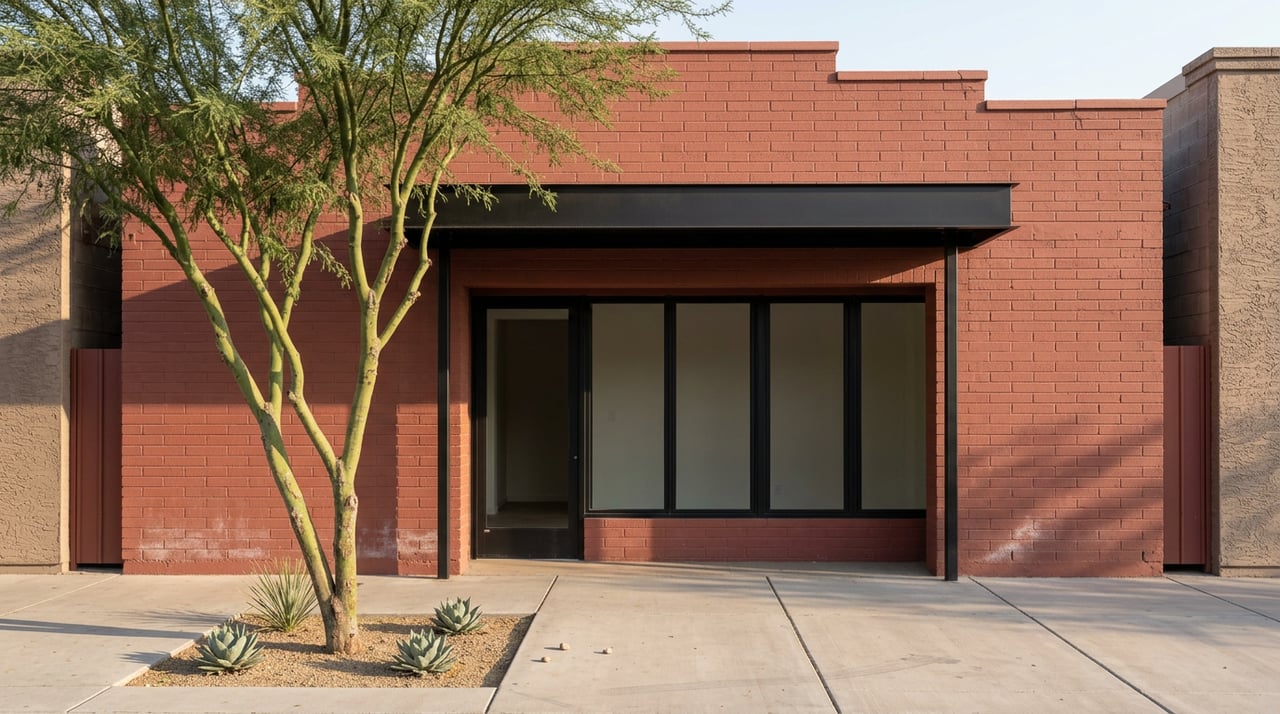
On the first Friday of the month this August, the first thing you noticed at the corner of Third Street and Roosevelt was the traffic. Cars moved through where a crowd used to stand shoulder to shoulder. No vendor tents, no food truck line wrapping the block, no PA system testing levels before a band goes on. If you moved to this neighborhood any time in the last decade for exactly that energy, the quiet read like loss.
But the change is narrower. What left Roosevelt Row this year was one specific piece of a much bigger event, and what's replaced it on the ground is a set of addresses that don't need a street permit to function. If you already live here, the useful question isn't "where did First Friday go." It's "what do I actually do this Friday," and that answer has gotten longer, not shorter.
What actually left, and what didn't
The part that moved is the ARTS Market: the street closure, the several hundred vendor booths, the version of First Friday that turned Roosevelt Street into a pedestrian mall once a month. In April, Roosevelt Row Community Development Corporation and Downtown Phoenix Inc. announced that closure would be suspended indefinitely, citing community feedback and a string of safety incidents in and around the vendor footprint. By August, the organizers running that street-fair format had relocated it entirely to Cannon Beach Entertainment Center in Mesa, a complex near Warner and Power roads that already houses an indoor surf venue, a kids' playground, and an obstacle course, with a movie theater and go-karting still under construction.
What didn't move is everything that made Roosevelt Row a neighborhood before it was a monthly event. The joint statement from RRCDC and Downtown Phoenix Inc. was specific on this point: the district's small businesses, galleries, and arts organizations would stay open and active during First Friday, with or without the vendor market. On the ground, that means places like these are still doing exactly what they've always done on a first Friday evening:
- ATL Wings, at the corner of Fifth and Roosevelt
- Roro Dogs
- Straw and Wool Hat Company
- Overdue Vintage
- La Leonada Munchies, the food truck that's held a spot in the district since 2021
None of them closed. None of them left. The vendor tables that used to fill the space between them are what's gone.
How Roosevelt Row has changed
Here's the detail that reframes the whole story. According to Greg Esser, a longtime downtown Phoenix arts advocate who helped organize the district's earliest street closures, roughly 60 percent of the land in this neighborhood was vacant when those closures began back in 2005 and 2006. By 2010, attendance had grown enough that organizers moved to closing Roosevelt Street outright to manage the crowds. Esser says the intersection of Third Street and Roosevelt is now the most densely populated residential intersection in the state of Arizona.
That single fact does more work than any attendance figure. First Friday attendance estimates vary depending on who's counting, ranging from roughly 14,000 to more than 20,000 people on a given night at its peak. But attendance was always a visitor metric. The residential density number offers a different perspective on how the district has changed since the street closures began. A street fair built for a mostly vacant district in the mid-2000s was solving a different problem than the one this neighborhood has in 2026.
The corridor that grew while nobody was watching the street fair
While the ARTS Market debate played out over the spring, a genuinely new restaurant and bar corridor was forming two blocks in either direction, mostly without depending on First Friday at all.
On Grand Avenue, pizzaiolo Justin Piazza opened Grandioso at 1229 Grand Ave on July 15. Piazza spent nearly two decades running La Piazza Al Forno in Glendale before it closed, and Grandioso is his return to the neighborhood, a 25-seat room with four pizza styles (New York, Roman, Detroit, and tavern), a pool table, a jukebox, and murals by artist AztecSmurf covering a building that used to be cobalt blue. A few blocks up the same street, the former Grand Avenue Pizza Company space at 1031 Grand is separately being taken over by the Hungry Homie team, which puts two independently owned pizza rooms within a few blocks of each other on Grand by early fall, on a strip that's historically been arts first and food a distant second.
At First Avenue and McKinley, the Clive Collective, the group behind Cala and Tell Your Friends, is converting the historic Stoddard-Harmon House into three side-by-side concepts run out of one commissary kitchen. Ada is the anchor, coastal American cooking with a wood-fired grill and a raw bar. Love Call is the small circular bar next door, built for a drink rather than a full dinner. KUZA Tori, tucked at a rear alley entrance, is doing robatayaki and Japanese street food. Early reporting had these opening in January and February of this year. The timeline has since slipped, and the group is now targeting late 2026 for all three, so this is one to watch rather than one to walk into this month.
A short walk south, at Central Avenue and Portland Street, the space that sat dark for years as Fez on Central is now PoNy's Miches Michelada Bar & Grill, a downtown expansion of a West Valley mariscos spot run by Jose "Pony" Flores, his wife Analiz Gonzalez, and Sergio Escamilla. Unlike their original West Valley location, this one carries a liquor license, so the michelada program that made the original a destination now comes with a full bar to match.
Roosevelt Row itself picked up new rooms independent of the street-fair question entirely. Julian Wright, the restaurateur behind Pedal Haus Brewery, Sake Haus, and Luckys Indoor Outdoor, opened the tiki bar Tropic Thunder at 1014 N. Second Street on January 21. And Prescott-based Vivili Hospitality Group, led by Skyler Reeves, put four million dollars into a build-out at First and Portland streets for three more concepts: Hero, an elevated pasta-and-steak room; Pizzanista!, a casual Los Angeles pizza import; and Bar Saint Bruno, a classic cocktail bar tucked behind it. Construction was underway as of last winter, with the group aiming to open the trio sometime this year.
Over in the Warehouse District, Cesar Velasco's Otra Pizzeria moved from pop-up to brick and mortar inside the historic Gerardo Building on Third Street, with a wood-fired oven visible from the dining room. Above it, Better Days opened as a vintage dive bar from the team behind The Churchill, which means one building now holds two operators running two different rooms on top of each other.
What a Friday actually looks like now
For a resident within walking or light-rail distance of any of these blocks, a typical first Friday night now plays out closer to this:
- Start at PoNy's Miches on Central and Portland for a michelada, now that the downtown location carries a full liquor license the original West Valley spot never had.
- Walk the galleries and murals that are still operating on Roosevelt Row, just as they did before the vendor market relocated, since nothing about the art itself changed.
- Stop at one of the businesses that stayed open through the transition, whether that's a wing at ATL Wings or a hot dog at Roro Dogs.
- Close the night on Grand Avenue with a Detroit-style square at Grandioso before the jukebox gets loud.
That's four stops that didn't exist as a connected sequence a year ago, and none of them require a road closure to work.
Why this matters past one Friday a month
The easy read on this year is that downtown Phoenix lost something. The more accurate read is that the neighborhood's evening life now includes options beyond that one specific event. A monthly street fair built for a mostly vacant district in the mid-2000s made sense when there was nothing else drawing people downtown after dark. A neighborhood dense enough to be the most residential intersection in the state, with a working restaurant and bar corridor spread across Grand Avenue, First Avenue, and the Warehouse District, has more options for evening activity. The Meritage Collection's Denū hotel, a 236-room, 17-floor project slated to open downtown this fall with a rooftop pool bar and the first full-service spa at any downtown hotel, is one more sign that operators are betting on this corridor as a year-round draw rather than a once-a-month event.
None of this requires anyone to plan a move. It's just what a Friday here looks like now, whether or not the street fair ever comes back.
If you're the person in your building who gets asked where to send visitors, or you've been circling this neighborhood from the outside and wondering whether the energy holds up past one signature event, The Taege Team knows these blocks well enough to talk through what's actually changed and what it might mean for you. Reach out anytime, no First Friday required.