
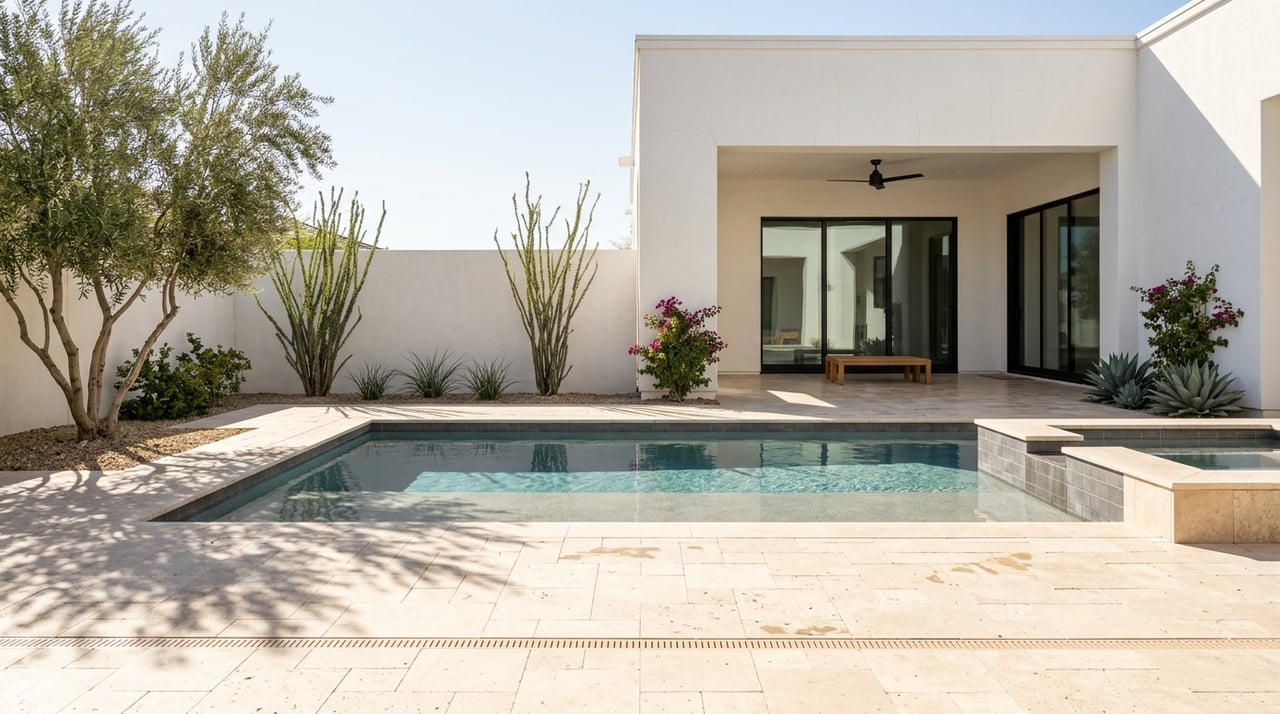
Trying to choose between a shiny new build in the East Valley and an established home in Scottsdale or 85018? You are not alone. For many buyers in Greater Phoenix, this decision comes down to more than looks. It is really about price, lifestyle, monthly costs, and how much maintenance you want to take on. If you are weighing your options, this guide will help you compare the tradeoffs clearly so you can make a more confident move. Let’s dive in.
Start With the Price Gap
If you are comparing Scottsdale, 85018, and the East Valley, the biggest reality check is price. 85018 is not the budget alternative. In the March 2026 Phoenix REALTORS and ARMLS data, the year-to-date median sales price in 85018 was $1.7 million, while Scottsdale citywide was $1.2875 million.
The East Valley sits in a very different range. The same year-to-date report showed Chandler at $560,000, Gilbert at $589,000, and Mesa at $489,990. Phoenix citywide was $479,995, which makes both Scottsdale and 85018 part of the premium tier, while many East Valley markets remain far more accessible.
That matters because your “new build or resale” decision is often also a location and price bracket decision. In many cases, you are not comparing two similar homes at similar price points. You are comparing an established luxury-area resale with a newer home farther east at a meaningfully lower cost.
How New Construction Prices Compare
New construction pricing makes the split even clearer. In Scottsdale, current Toll Brothers communities show starting prices from the upper $900,000s to well above $2 million, depending on the collection and community. Sereno Canyon, for example, has collections starting at $970,000, $1.223 million, $1.376 million, $2.267 million, and $2.788 million.
By contrast, East Valley new construction still offers lower entry points. Lennar’s Hawes Crossing in Mesa starts at $403,990 for townhomes and reaches $639,990 for other offerings. Madera in Queen Creek starts at $529,490 and runs to $793,490, and a current Pulte home in Apache Junction is listed at $559,210.
If your top goal is getting into a newer home with builder features and lower near-term maintenance risk, the East Valley gives you more options at lower price points. If your goal is a luxury new build in a Scottsdale setting, you should expect that choice to come with a much higher entry cost.
What You Get With a Resale Home
Resale homes often appeal to buyers who want an established setting, mature landscaping, or a location closer to central Phoenix and Scottsdale lifestyle hubs. In 85018 especially, many buyers are paying for proximity, lot value, and a strong established-market feel rather than brand-new finishes.
A resale can also give you more variety. You may find different architecture, remodel potential, or homes in neighborhoods that are already built out rather than part of a new subdivision. For some buyers, that character and location are worth the tradeoff.
The budget side is where you need to stay realistic. Fannie Mae notes that a home’s age can be a clue to future maintenance needs, including major systems like the roof or HVAC. With resale, the lower purchase price can be attractive, but your repair timeline is often less predictable.
What You Get With a New Build
New construction tends to attract buyers who want a more turnkey experience. You are usually getting current finishes, modern layouts, and the benefit of being the first owner. In practical terms, that can mean fewer surprise repair costs in the first few years.
Builder warranties are a big part of the appeal. The FTC notes that new homes commonly come with builder warranties, and FHA and VA loans require third-party warranties for buyer protection. That does not remove every risk, but it can reduce some of the near-term uncertainty compared with an older home.
Energy performance can also matter in Arizona. ENERGY STAR guidance notes that certified new homes are built to deliver energy-efficiency benefits, which can help lower utility bills. In a hot-weather market, that can become a meaningful part of your monthly budget.
Look Beyond the List Price
The smartest comparison is not just new build versus resale. It is total cost of ownership.
CFPB guidance reminds buyers that the true cost of homeownership includes more than the purchase price. Mortgage interest and fees, transfer and property taxes, and other ownership costs all belong in your budget. Fannie Mae also points buyers to factors like taxes, insurance, HOA structure, walkability, and yard size because all of them affect your monthly cost.
Here is how that plays out in real life:
- A resale home may cost less up front, but you might face roof, HVAC, appliance, or landscaping expenses sooner.
- A new build may cost more initially, but builder warranties and energy efficiency may reduce some short-term costs.
- A planned community may include HOA fees, but those dues may also support shared amenities and maintenance.
The right question is not just, “What can I afford to buy?” It is, “What can I comfortably own month after month?”
Builder Incentives Can Help, But Read Closely
If you are shopping new construction, incentives may catch your eye. That is fair, especially in a rate-sensitive market. But these offers often come with timing limits, specific inventory requirements, or preferred lender conditions.
For example, Lennar recently advertised a 3.990% conventional rate promotion in metro Phoenix for buyers who signed between April 20, 2026 and April 26, 2026 and closed by May 29, 2026, with the offer requiring Lennar Mortgage. Pulte is also advertising limited-time low-rate offers on select quick move-in homes, including special FHA and 7/6 ARM promotions.
These promotions can be valuable, but they can also change quickly. If you are comparing a builder incentive to a resale home, make sure you understand exactly which homes qualify, what financing is required, and whether the monthly savings outweigh other tradeoffs in location, lot, or HOA costs.
HOA Rules Matter More Than Many Buyers Expect
HOA fees are common in new communities, and they are not automatically a negative. Often, they are part of the trade for neighborhood amenities, landscape maintenance, or shared facilities. Fannie Mae notes that HOA or condo fees may be monthly, quarterly, or annual and can cover services like grounds maintenance and lawn care.
In Arizona, the paperwork matters too. The Arizona Department of Real Estate says a Subdivision Disclosure Report, also called a Public Report, must be provided before a buyer signs the purchase contract. The state’s buyer checklist also reminds purchasers to review CC&Rs because they may restrict things like landscaping, RV parking, or play equipment.
That means you should compare more than the floor plan. You should also compare how the community operates and whether the rules fit the way you want to live.
Amenities Look Different in Scottsdale and the East Valley
Community amenities can shape how a place feels day to day. East Valley master-planned communities often focus on broad recreational features. Hawes Crossing in Mesa includes a swimming pool, basketball court, pickleball court, playground, and picnic area. Madera in Queen Creek includes a swimming pool, picnic area, playground, and bocce court.
Scottsdale new communities often lean in a more luxury-resort direction. Cavasson and Sereno Canyon highlight features like gated access, resort-style pools, cabanas, outdoor kitchens, trail access, and mountain or desert views. Those amenities may feel worth the dues for some buyers and unnecessary for others.
This is where your priorities matter. If you want a newer community with a long amenity list at a lower price point, the East Valley may offer more value. If you want a higher-end setting with a more luxury-focused experience, Scottsdale may be a better fit.
Lifestyle Fit Is a Big Part of the Decision
Scottsdale has a strong established-lifestyle appeal. Visit Phoenix describes Old Town Scottsdale as a district known for dining, shopping, bars, lounges, restaurants, clubs, art galleries, and museums. Scottsdale Arts also describes its Civic Center campus as a vibrant destination in the heart of Old Town.
That gives Scottsdale a clear edge if you want access to established entertainment, arts, dining, and a more polished resort-style atmosphere. Buyers who value that environment often see the location itself as a major part of the home’s value.
The East Valley offers a different rhythm. Gilbert’s Heritage District includes more than 30 restaurants along with boutiques, a theater, a museum, public parking, and continued redevelopment. Mesa highlights more than 2,060 acres of park land across 209 parks, plus recreation centers, aquatic centers, trails, and public art.
Neither option is universally better. They simply serve different priorities. Scottsdale often fits buyers who want premium lifestyle access and an established luxury setting, while the East Valley often fits buyers who want newer communities, more recreation-driven amenities, and a lower entry price.
Think in Terms of Your Daily Corridor
Commute and routine should stay part of the conversation. The cleanest way to think about it is by corridor, not by hype.
Scottsdale communities like Cavasson emphasize quick access to Loop 101 and Loop 202. East Valley communities like Hawes Crossing point to proximity to Loop 202 and Phoenix-Mesa Gateway Airport, while Queen Creek new-home materials emphasize access to I-10 and Loop 202.
In simple terms, Scottsdale often fits north and central routines better, while East Valley communities often fit east and southeast routines better. If you already know where you work, travel, or spend weekends, that can help narrow the right side of the map.
A Simple Way to Decide
If you are feeling torn, this framework can help:
Choose 85018 or Scottsdale resale if you want:
- An established location
- More character or remodel potential
- Closer proximity to central Phoenix or Scottsdale lifestyle hubs
- A premium-area address and are prepared for premium-area pricing
Choose Scottsdale new construction if you want:
- A luxury new-build experience
- Modern finishes and builder warranties
- Resort-style amenities and a polished community feel
- To stay in a premium lifestyle market and can support the higher budget
Choose East Valley new construction if you want:
- Lower entry points for newer homes
- Builder incentives that may improve affordability
- Planned-community amenities
- More house or newer product for the money
The right answer depends on how you balance location, budget, maintenance, and lifestyle. For some buyers, paying more for proximity and character is the smart move. For others, moving east for a newer home and lower starting price creates a better long-term fit.
If you are weighing Scottsdale, 85018, and the East Valley, a local comparison can save you time and keep the numbers in perspective. The best choice is usually not the most talked-about option. It is the one that fits your budget, your routine, and the kind of ownership experience you want over the next several years. If you want help sorting through the tradeoffs, The Taege Team can help you compare neighborhoods, resale opportunities, and new-build options across Greater Phoenix.
FAQs
How do 85018 home prices compare with Scottsdale and East Valley home prices?
- In the March 2026 year-to-date Phoenix REALTORS and ARMLS data, 85018 had a median sales price of $1.7 million, Scottsdale was $1.2875 million, Chandler was $560,000, Gilbert was $589,000, and Mesa was $489,990.
Are new construction homes in Scottsdale more expensive than East Valley new builds?
- Yes. Current examples in the research show Scottsdale new construction often starting from the upper $900,000s into the multimillion-dollar range, while East Valley communities still offer options starting in the low-to-mid $400,000s and $500,000s.
What costs should buyers compare when choosing between a new build and a resale home?
- Buyers should compare the full ownership picture, including mortgage costs, taxes, insurance, HOA fees, utility costs, and likely repair or replacement costs for items like HVAC, roofing, appliances, and landscaping.
Do Arizona new construction communities usually have HOA rules and disclosures?
- Yes. The Arizona Department of Real Estate says buyers in subdivisions must receive a Public Report before signing a purchase contract, and buyers should review CC&Rs because they can affect property use and community rules.
Are builder incentives on East Valley new homes always available?
- No. Builder incentives are often limited-time offers tied to certain homes, deadlines, and preferred lender programs, so buyers should verify the terms carefully before relying on them in their budget.
Is Scottsdale or the East Valley better for daily commute patterns in Greater Phoenix?
- It depends on your routine. Scottsdale often fits north and central travel patterns better, while East Valley locations often fit east and southeast routines better, especially near Loop 202, I-10, and Phoenix-Mesa Gateway Airport.