
If you picture Scottsdale as a place where people simply head indoors for half the year, think again. Outdoor living here is not an extra perk. It is part of how the city is planned, how people move around, and how many homes are designed to work with the desert climate. If you are thinking about buying, selling, or relocating, understanding that rhythm can help you choose the right area and the right home features. Let’s dive in.
Why outdoor living matters in Scottsdale
Scottsdale’s outdoor culture is backed by real infrastructure, not just good weather. The city reports 30,580 acres of preserved land, 41 parks, 11 trailheads, 232 miles of nonmotorized trails, and 129 miles of paved pathways plus 151 unpaved. That kind of network shapes daily routines in a way visitors notice and residents rely on.
Open space is also a planning priority for the city. Scottsdale states that open space supports community well-being, and its environmentally sensitive lands rules are designed to preserve natural area open space and protect washes, ridges, and peaks in desert and mountain areas north and east of the CAP Canal. In practical terms, that helps explain why outdoor access feels built into so many parts of the city.
Paths shape everyday movement
Scottsdale’s path system is meant for both recreation and transportation. The city identifies the Indian Bend Wash, Crosscut Canal or Arizona Canal, and Central Arizona Project Canal corridors as its three primary shared-use path systems. Scottsdale is also a gold-level Bicycle Friendly Community, and city policy says shared-use path access should be within half a mile of all residences when feasible.
That matters when you think about how a neighborhood actually functions day to day. A nearby path can make it easier to walk, bike, or simply enjoy a change of scenery without planning a full outing. For many buyers, that kind of access becomes part of the home’s lifestyle value.
Indian Bend Wash Greenbelt stands out
The Indian Bend Wash Greenbelt is one of the clearest examples of Scottsdale’s outdoor identity. It runs 11 miles through the city and includes more than 24 grade-separated crossings, which helps keep trail users away from major intersections. That design makes the corridor feel more continuous and more usable for everyday activity.
For central Scottsdale living, the Greenbelt often becomes part of the weekly routine. It is not just a scenic feature on a map. It supports walks, bike rides, casual meetups, and access to parks and public spaces along the way.
Canal trails connect neighborhoods and destinations
Scottsdale says its neighborhood trails connect schools, neighborhoods, preserve trailheads, parks, places of employment, and other points of interest. The Crosscut Canal Trail runs through residential areas and connects to Old Town shopping, dining, and entertainment. The Arizona Canal Trail also extends beyond Scottsdale and connects to other Valley destinations.
This is one reason outdoor living here feels practical as well as recreational. Trails can serve as neighborhood connectors, not just weekend amenities. When you are comparing communities, that kind of connection can influence convenience, mobility, and how often you actually use the outdoors.
The preserve defines another side of Scottsdale
If the Greenbelt helps define central Scottsdale, the McDowell Sonoran Preserve shapes a different experience in the city’s north and east. Scottsdale describes the preserve as more than 30,500 acres with over 230 miles of multi-use trails for hikers, bikers, and equestrians. It gives the city a major natural open-space presence that is rare in a large metro area.
The preserve also reflects Scottsdale’s seasonal rhythm. The Conservancy says public activities are concentrated mostly from September through April. That lines up with broader outdoor patterns in the area, where cooler months tend to support longer outings and more frequent use.
For buyers, preserve access can influence the feel of a home search. Some people want quick access to natural trails and desert views, while others prefer a more urban setting with nearby parks and paved paths. Both are part of Scottsdale’s outdoor identity, but they create different day-to-day lifestyles.
Parks add texture to daily life
Scottsdale’s outdoor story is not limited to major trail systems and desert preserves. The city highlights signature destinations including the Indian Bend Wash Greenbelt, McCormick-Stillman Railroad Park, the McDowell Sonoran Preserve, and the Xeriscape Garden. These spaces help make outdoor time feel accessible even if you are not heading out for a long trail day.
McCormick-Stillman Railroad Park, for example, is a 30-acre park in the heart of Scottsdale. Scottsdale Civic Center is another signature public space, with lawns, fountains, gardens, public art, and areas for events, casual strolls, and relaxation. Together, places like these give outdoor living a more social and flexible feel.
Xeriscape reflects local landscape design
The Xeriscape Garden at Chaparral Park says a lot about how Scottsdale approaches outdoor spaces. The city describes it as an educational resource for regionally appropriate planting, low-water landscaping, and water harvesting. It includes more than 7,000 plants and 200 species.
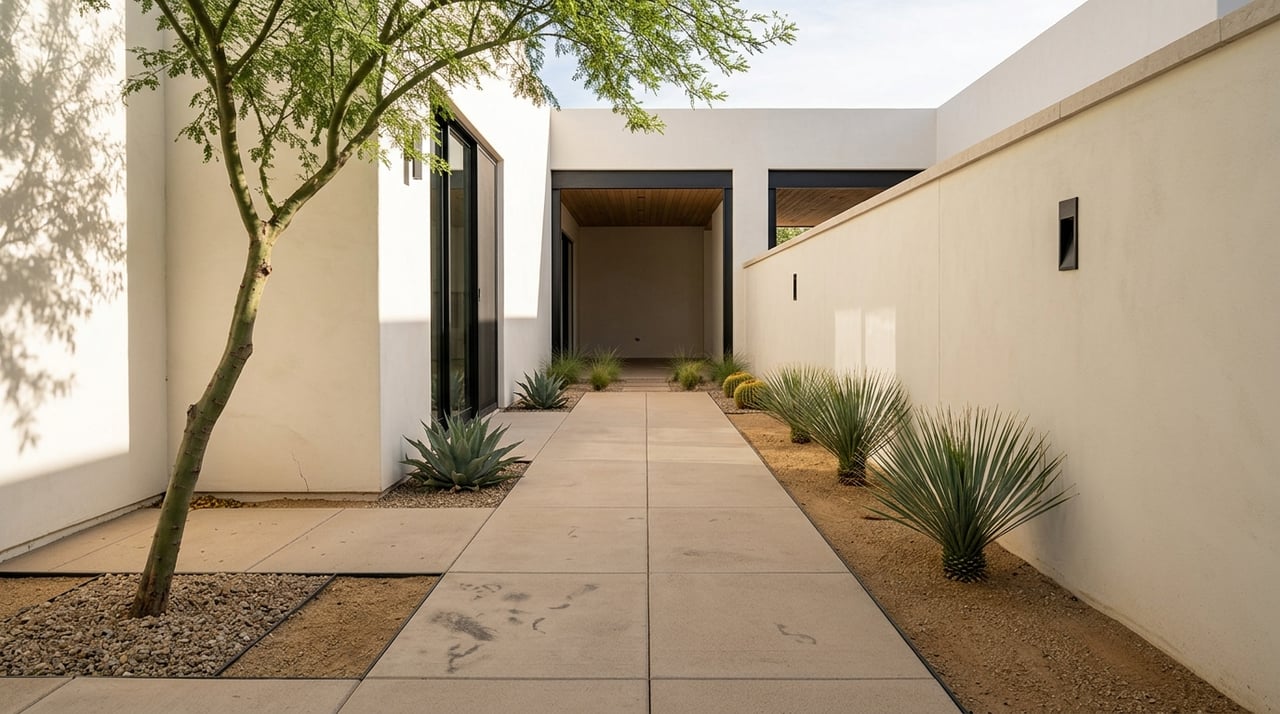
For homeowners, that matters because it mirrors the look and logic of many Scottsdale yards and common areas. Low-water landscaping is not just an aesthetic choice. It fits the climate, supports easier maintenance, and often works well with the clean, desert-forward design many buyers want.
Patio culture is part of the lifestyle
Scottsdale’s outdoor culture is social as much as it is recreational. The city’s restaurant design guidelines encourage outdoor dining areas and indoor-to-outdoor flow, while also emphasizing pedestrian access and consideration of sun angles and solar exposure. That means the built environment itself is designed to support time outside.
In everyday life, that shows up in patios, shaded dining areas, misters, fans, and layouts that make outdoor spaces feel like real living areas. This is one reason patios are so central to the Scottsdale experience. They are not an afterthought. They are part of how people gather, relax, and enjoy the city.
Seasonal events bring people outside
Outdoor living in Scottsdale also shows up in the city’s event calendar. Canal Convergence is a free 10-night outdoor public art event held at the Scottsdale Waterfront each November. Cycle the Arts is an annual April bike tour of public art, and the 2026 ride featured nine art stops along a 10-mile route in northern Scottsdale.
These events reinforce the idea that outdoor spaces are active community spaces. They are used for art, recreation, dining, and everyday connection. If you are relocating, that can be a helpful clue about what living in Scottsdale actually feels like beyond property photos.
Climate shapes the schedule
Scottsdale’s outdoor pattern is closely tied to seasonal timing. NOAA normals at the Phoenix Sky Harbor station show a typical July daily maximum of 106.5 degrees and a typical December daily maximum of 66.2 degrees. Those numbers help explain why outdoor routines often shift toward cooler months, plus early mornings and evenings during summer.
This does not mean outdoor living disappears in warmer months. It means people adapt. Shaded spaces, pools, covered patios, and smart timing become a bigger part of the equation.
What buyers should watch for
If you are shopping for a home in Scottsdale, outdoor living is worth evaluating in practical terms. Instead of asking only whether a home has a patio, it helps to ask how well the property connects to the city’s broader outdoor rhythm.
A few features and location details can make a real difference:
- Proximity to greenbelts, canal trails, or preserve trailheads
- Easy access to parks and shared-use paths
- Covered patios or pergolas
- Shade structures that make outdoor space more usable
- Pool courtyards or outdoor gathering areas
- Desert landscaping or low-water landscape design
- Indoor-outdoor flow that supports everyday use
These details often affect how much you enjoy a home after move-in. A beautiful backyard matters, but so does how comfortably and often you can use it.
Neighborhood upkeep matters too
Scottsdale notes that some neighborhood trails sit on HOA-owned easements or on property owned by individual owners, with adjacent property owners responsible for maintenance. That means trail access is not just about location on a map. Condition and upkeep can shape the experience too.
When you are comparing homes, it helps to look beyond the listing photos and notice how nearby paths, shared spaces, and outdoor edges are maintained. Those details can affect both daily enjoyment and long-term appeal.
What sellers can highlight
If you are selling a Scottsdale home, outdoor features deserve thoughtful presentation. Covered patios, shaded seating areas, tidy desert landscaping, and strong indoor-outdoor flow speak directly to how buyers want to live here. In many cases, outdoor usability is just as important as square footage.
This is where presentation can help tell the right story. A well-prepared patio, a clean courtyard, or a low-maintenance landscape layout can make it easier for buyers to picture daily life in the home. In a market where lifestyle matters, the outdoor setting can become a major part of the value conversation.
Why this lifestyle matters in real estate
Scottsdale’s paths, parks, preserve access, and patio culture are not separate from housing. They help define what different parts of the city feel like and how residents spend their time. For some buyers, that means prioritizing Greenbelt access. For others, it means focusing on preserve trails, shaded outdoor rooms, or a neighborhood with strong path connections.
When you understand how outdoor living works in Scottsdale, you can make more informed choices about location, home design, and resale appeal. That kind of local context matters whether you are buying your first place, moving up, or preparing to sell.
If you want help finding a Scottsdale home that fits the way you actually want to live, or you are preparing to position your current home for the market, The Taege Team can help you navigate the details with clear guidance and local insight.
FAQs
What makes Scottsdale outdoor living different from other Phoenix-area communities?
- Scottsdale combines 30,580 acres of preserved land, 41 parks, 11 trailheads, 232 miles of nonmotorized trails, and extensive paved and unpaved pathways, which makes outdoor access a core part of daily life.
What is the Indian Bend Wash Greenbelt in Scottsdale?
- The Indian Bend Wash Greenbelt is an 11-mile corridor through Scottsdale with more than 24 grade-separated crossings, designed to support safer and more continuous trail use.
What should Scottsdale homebuyers look for in outdoor-friendly homes?
- Buyers should look at proximity to trails, parks, and preserve access, along with features like covered patios, shade structures, pool courtyards, desert landscaping, and strong indoor-outdoor flow.
How does climate affect outdoor living in Scottsdale?
- With a typical July daily maximum of 106.5 degrees and a typical December daily maximum of 66.2 degrees, outdoor routines often shift toward cooler months and toward early mornings or evenings in summer.
Why do Scottsdale patios matter in real estate?
- Patios matter because Scottsdale’s built environment encourages outdoor dining and social use, so shaded and functional outdoor spaces often play an important role in how buyers evaluate a home.