
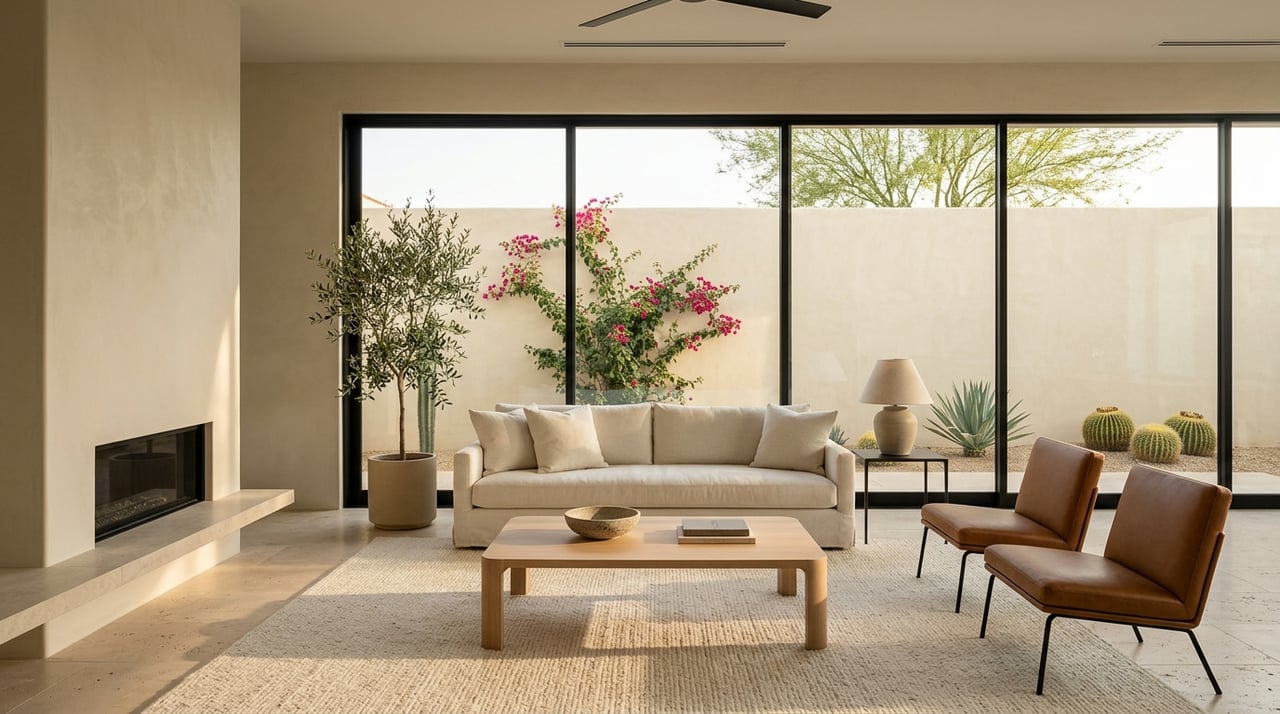
When buyers have more homes to compare, the homes that feel clean, current, and easy to imagine living in often rise to the top. That matters in central Phoenix, where inventory was up and homes were taking longer to sell in early 2026, according to Realtor.com’s Phoenix market trends. If you want your home to stand out in areas like Arcadia, Biltmore, Camelback East, or nearby central Phoenix neighborhoods, smart staging can help you compete without over-improving. Here’s how to focus your time and budget where it can make the biggest impact.
Why staging matters in Central Phoenix
In a market with more active listings and a longer average time on market, buyers tend to compare homes more carefully. They are not just looking at price. They are also judging condition, layout, light, and how move-in ready a home feels.
That is especially true in central Phoenix submarkets where prices often sit above the city median. The City of Phoenix 2025 Community Needs Assessment shows higher listing prices in places like Arcadia, Biltmore, and the Central Avenue Corridor, which means presentation can carry even more weight when buyers are making side-by-side comparisons.
What the data says staging can do
The strongest case for staging comes from the National Association of Realtors 2025 Profile of Home Staging. In that report, 29% of agents said staging increased the dollar value offered by 1% to 10%, and 49% said staging reduced time on market.
Just as important, buyer agents said staging made it easier for 83% of buyers to picture themselves in the home. That matters because your listing usually gets judged online first, then in person. If buyers can quickly understand the space and lifestyle the home offers, they are more likely to book a showing and make a stronger offer.
Start with the rooms buyers notice most
If you are trying to sell higher, not every room needs the same level of attention. NAR found that the most important rooms to stage are the living room, primary bedroom, and kitchen.
That gives you a clear priority list if you want to spend wisely. Focus first on the areas buyers emotionally connect with and photograph most often.
Living room first
The living room is often where buyers decide whether a home feels open, comfortable, and easy to live in. NAR reported it was the top room to stage, and it was also the most commonly staged room by sellers.
In central Phoenix, that usually means creating a light, uncluttered seating area with clear walkways and a simple focal point. If the room has large windows, mountain views, or a connection to a patio, your staging should make those features obvious.
Refresh the primary bedroom
The primary bedroom should feel restful and spacious. Buyers do not need dramatic styling. They need a room that feels calm, functional, and move-in ready.
Use neutral bedding, remove extra furniture, and keep surfaces mostly clear. If your bedroom is oversized, staging can help define the scale. If it is smaller, the goal is to make it feel open and bright.
Simplify the kitchen
Kitchens carry a lot of emotional weight with buyers, but you do not need a full remodel to improve the impression. In many cases, the best results come from editing the space, clearing counters, and making sure the room looks fresh and well cared for.
A few visible changes can go a long way. Clean grout, polished hardware, fresh paint, and better lighting often do more for resale than highly personalized upgrades.
Do not overlook outdoor living
In Phoenix, usable outdoor space deserves more attention than it gets. NAR found that outdoor and yard spaces were staged less often than the main interior rooms, but in this market, a patio, courtyard, or pool deck often acts like an extra living area.
If buyers can see the outdoor space from the living room, kitchen, or primary suite, stage it with the same care. A clean seating area, tidy landscaping, and clear sightlines can make the home feel larger and more connected.
The lowest-cost prep usually comes first
Before you pay for furniture, focus on the basics that support every showing and every photo. According to NAR, the most common seller prep recommendations were decluttering, cleaning the entire home, and improving curb appeal.
These are often the highest-impact items because they affect how buyers experience every room. They also support better photography, better online engagement, and stronger in-person impressions.
Your high-impact prep checklist
- Declutter every room, closet, and visible storage area
- Deep clean the entire home
- Remove personal items that distract from the space
- Improve curb appeal at the entry and front elevation
- Open up natural light wherever possible
- Edit furniture so rooms feel larger and easier to navigate
- Make patios, courtyards, and pool areas feel intentional
Choose updates with visible payoff
If your home needs more than styling, keep your updates focused and practical. The 2025 Remodeling Impact Report points sellers toward improvements like painting the entire home or repainting a single interior room.
The same report also found strong cost recovery for smaller, visible projects like a new steel front door and closet renovation. In other words, resale value often comes from updates buyers notice right away, not from large remodels that may not fully pay you back.
Best updates before listing
- Fresh interior paint in key spaces
- A clean, updated front door
- Better closet organization
- Repaired trim, hardware, and lighting
- Flooring touch-ups where wear is obvious
In higher-priced central Phoenix neighborhoods, this approach is often safer than chasing a major luxury renovation. Buyers usually respond well to homes that feel current, clean, and cared for.
Budget for staging where it counts
You do not need to stage every inch of the property to see results. NAR reported a median professional staging cost of $1,500, which supports a focused approach rather than a full-home redesign.
A smart budget usually starts with the entry, living room, primary bedroom, kitchen, and one outdoor area if it is attractive and visible. If your home is vacant, you may need more support. If it is occupied, editing, rearranging, and supplementing with key pieces may be enough.
For some sellers, financing prep work can make the process easier. Compass Concierge offers eligible sellers a way to front the cost of services like staging, flooring, and painting, with payment due at closing.
Make the online first impression count
Most buyers will meet your home online before they ever walk through the front door. Zillow reports that 95% of buyers looked online during their home search, which means your staging plan should be built for both photography and showings.
Photos are especially important. Zillow says 27% of prospective buyers identified high-resolution photos as the most important listing feature, and listings with fewer than nine photos were about 20% less likely to sell within 60 days.
Photo order that supports your sale
Based on NAR’s room-priority data and Zillow’s photo guidance, your strongest visual sequence is usually:
- Exterior and entry
- Living room
- Primary bedroom
- Kitchen
- Outdoor living area
This order helps buyers understand the home quickly. It also highlights the spaces that are most likely to drive an emotional connection.
Add a virtual tour when the home shows well
A virtual tour can strengthen a polished listing. Zillow reports that 70% of buyers said a virtual tour gives a better feel for the space than photos alone, and listings with a 3D Home tour sold 14% faster and received 37% more views.
That does not mean every home needs every digital add-on. It does mean that once your home is decluttered, staged, and professionally photographed, a virtual tour can help buyers better understand layout and flow.
A smart staging plan for Central Phoenix
If you want a practical way to prepare your home, keep it simple. Start with condition, then presentation, then marketing.
Step 1: Clean and edit
Declutter, deep clean, and remove anything that makes the home feel busy or smaller than it is. This creates the foundation for everything else.
Step 2: Improve what buyers see first
Address curb appeal, the front door, main living spaces, and the primary bedroom. These are the areas most likely to shape a buyer’s first impression.
Step 3: Make selective updates
Choose visible, contained improvements such as paint, lighting, hardware, and minor repairs. Avoid large projects unless there is a clear need.
Step 4: Stage for photos and flow
Arrange furniture to show room size, natural light, and easy movement. In Phoenix, do not forget the outdoor areas that function as living space.
Step 5: Launch with strong visuals
Use professional photography and consider a virtual tour if the home is showing well. Great marketing works best when the home is ready for it.
When you are preparing to sell in central Phoenix, the goal is not to make your home look generic. It is to make it easy for buyers to see its value. Thoughtful staging, targeted updates, and polished marketing can help your home stand out in a market where buyers have options. If you want a tailored prep strategy for your property, Jennifer Taege can help you evaluate what is worth doing before you list.
FAQs
What rooms should you stage first in a Central Phoenix home?
- Focus first on the living room, primary bedroom, and kitchen, since NAR found these are the rooms buyers respond to most.
How much does home staging usually cost before listing?
- NAR reported a median professional staging cost of $1,500, though the total can vary based on whether the home is vacant, occupied, or needs partial staging.
What are the cheapest staging improvements with the biggest impact?
- Decluttering, deep cleaning, improving curb appeal, and repainting visible surfaces are often the most affordable ways to improve buyer perception.
Is professional photography worth it for a Phoenix home sale?
- Yes. Zillow says high-resolution photos are one of the most important listing features, and professional real estate photography typically costs about $150 to $200.
Should you add a virtual tour to a staged home listing?
- It is often worth considering once the home is photo-ready, since Zillow reports that virtual tours help buyers understand the space and can lead to faster sales and more views.