

You’ve probably seen headlines claiming that new home inventory is now at its highest point since the housing crash. If you lived through 2008, hearing that can feel unsettling—especially when new construction seems to be popping up everywhere.
But here’s the thing: most of those attention-grabbing posts online are built to get clicks, not to give you the full story. When you look beyond the surface and dig into the data, the picture looks very different.
Why This Isn’t 2008 All Over Again
Yes, the number of newly built homes on the market is the highest it’s been in years. But that number on its own doesn’t mean we’re headed for trouble. New builds are just one piece of today’s housing puzzle.
To really understand where inventory stands—and how it compares to the oversupply of the past—you have to look at the whole picture: both new construction and existing homes (those that have already been lived in). That’s when the story shifts, and the reality becomes much clearer.
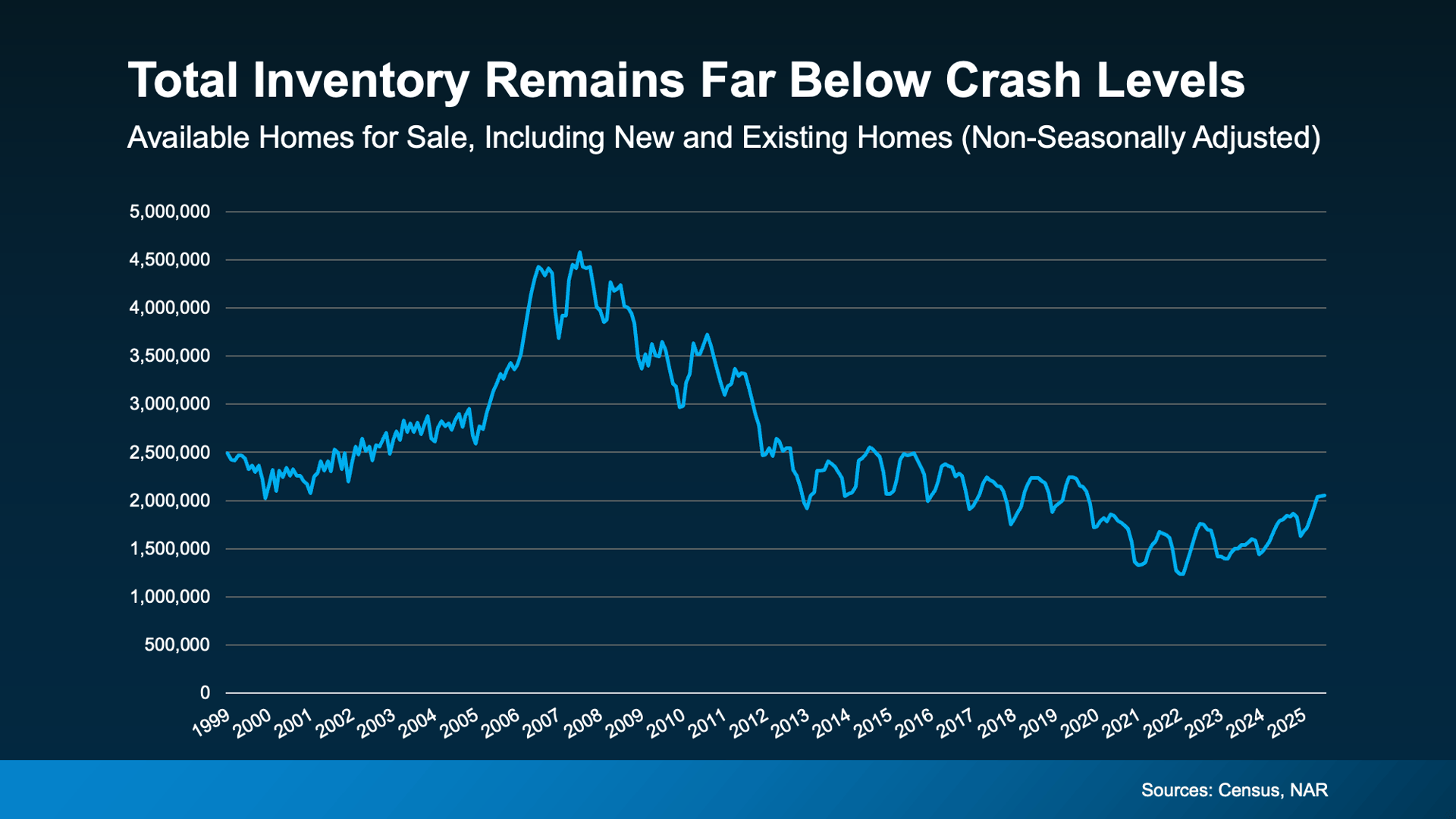
So, when you hear that new construction is nearing 2008 levels, it doesn’t mean we’re facing the same kind of oversupply we saw back then. The context is completely different.
Builders Have Been Playing Catch-Up for Years
One key detail that rarely makes the headlines is this: after the crash, builders pulled way back. For more than a decade, they simply didn’t build enough homes to keep up with population growth and demand.
That period of underbuilding created a significant housing shortage—one we’re still feeling today. What we’re seeing now isn’t a flood of excess homes like in 2008, but rather builders finally trying to close the gap that’s been growing for years.
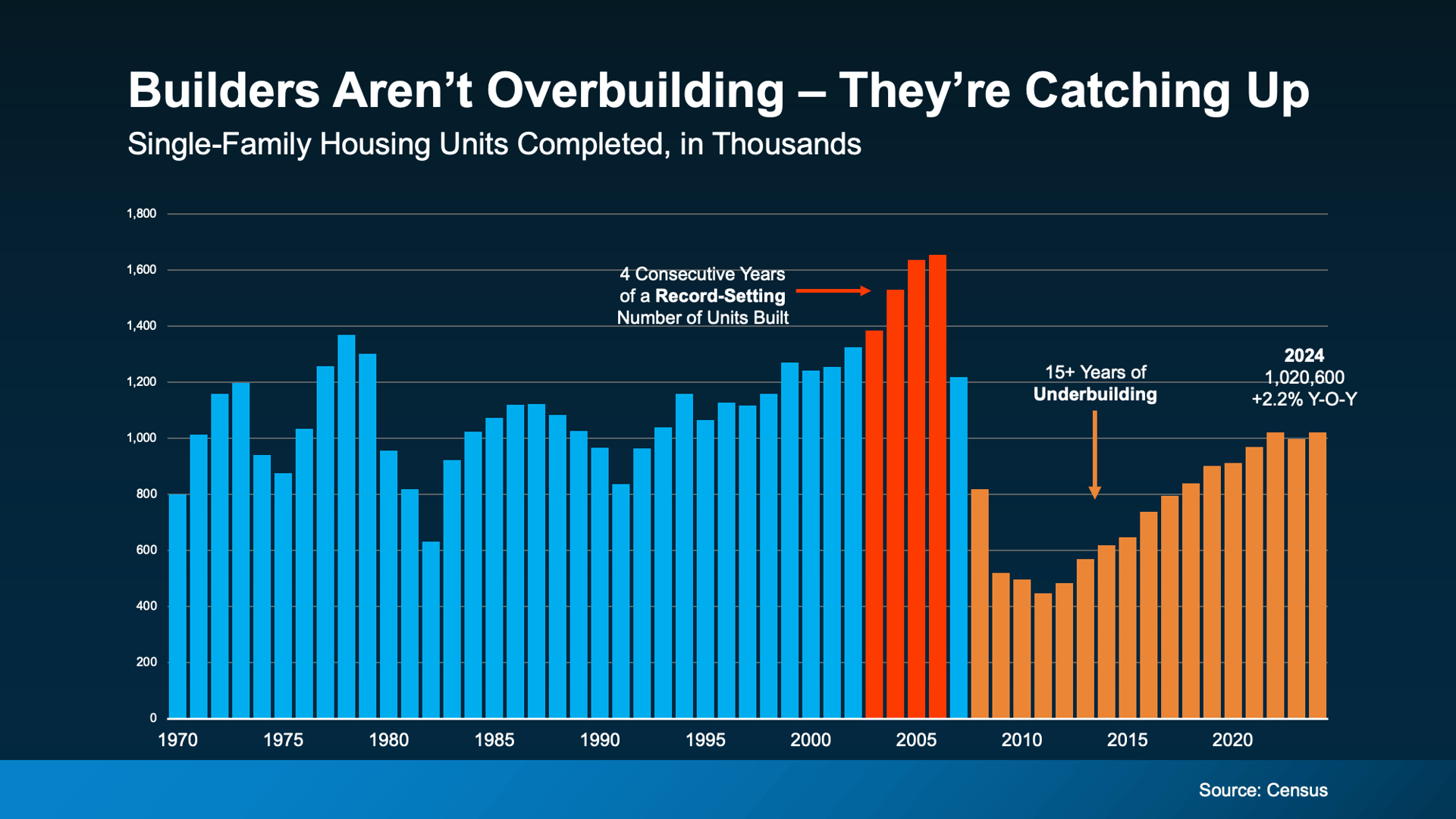
For more than 15 years, builders fell behind—producing far fewer homes than the market needed. Only recently have we started to see a gradual increase in new construction. But even with that growth, there’s still a long way to go. Realtor.com estimates it could take another 7.5 years of steady building just to close the gap.
And remember, real estate is always local. While some markets may see more homes available, others may still be tight on supply. On a national scale, though, today’s situation looks very different from what we experienced leading up to the 2008 crash.
Bottom Line
An increase in new homes for sale doesn’t automatically signal a housing crash. When you look at the bigger picture, the data makes it clear: overall inventory is still limited, and conditions are nothing like 2008.
If you’re curious about what new construction trends look like in your area—or how they could impact your plans—reach out to a trusted local agent for insight.