
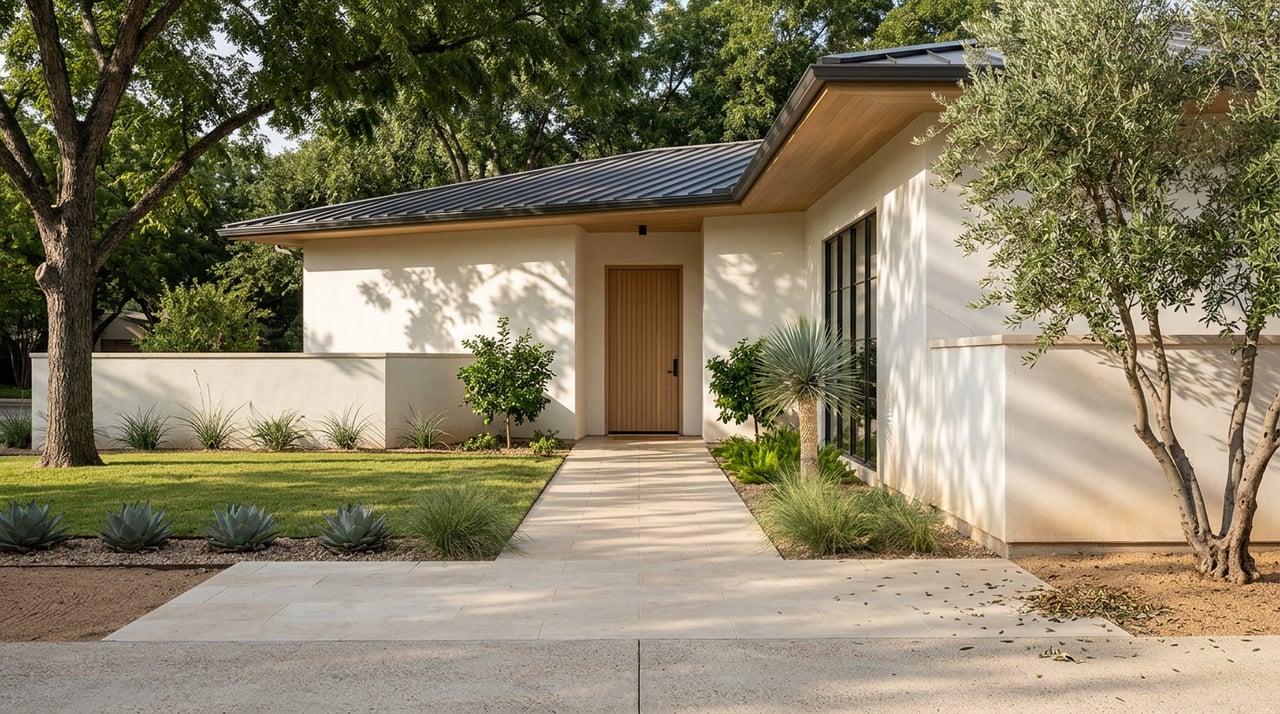
Pull up the citywide median and North Central looks like an outlier. Phoenix as a whole sold at a median of $464,000 over the three months ending May 2026, with homes going pending in about 51 days. Ask about a house on Central Avenue between Bethany Home and Northern and the number resets by an order of magnitude, into a range that starts around $800,000 and runs past $7 million for the estate lots.
That gap is not a story about better houses. It is a story about a zoning overlay most buyers have never opened, a linear park that gets capitalized into every lot it touches, and a rebuild math that punishes anyone who bids on the structure instead of the parcel. If you are shopping North Central in 2026, the thesis is simple: you are buying land governed by Section 664, and the house on it is almost incidental.
The overlay nobody reads before writing the offer
The North Central Avenue Special Planning District Overlay, codified at Section 664 of the Phoenix Zoning Ordinance, exists for one purpose. It provides guidance in the review of development proposals within the North Central Avenue Special Planning District and to preserve North Central Avenue's large lot, single family residential character.
Two mechanics inside that ordinance drive the price structure.
First, applicability. The overlay applies to all R1-10 zoned properties contained within the SPD Overlay District boundary. R1-10 is a large-lot single-family designation. If your target parcel is R1-10 and inside the boundary, the overlay controls what can be built. If it is a lot or two off the boundary, or zoned differently, it does not. That single line on a zoning map is the price cliff.
Second, lot geometry. For church properties in the SPD, the zoning provisions apply for a depth of 200 feet from the Central Avenue property line, and the Central Avenue lot width shall match the lot widths of properties across the street with a minimum width of 100 feet, though matching widths greater than 150 feet are not required. The frontage rule is why the corridor still reads as a boulevard of estate lots instead of a run of skinny infill.
The published planning study for the district, which you can read directly on phoenix.gov, walks through the character elements the overlay is written to protect: lot orientation, setbacks, heights, and the relationship between Central Avenue and the Murphy Bridle Path. It is the single most important document a serious North Central buyer can read before touring.
What the money actually buys
Citywide numbers flatten this neighborhood. The corridor between 7th Street and 7th Avenue, from roughly Missouri north to Northern, is the reference frame locals mean when they say "between the 7's." The North Central Phoenix Homeowners Association has been the steward of that stretch, and their framing is worth reading in their own words: the association has protected North Central for over 40 years, the area between 7th Street to 7th Avenue, Missouri to Northern, has retained its residential character, and North Central is one of the last original neighborhoods with tree-lined streets, a diversity of architecture, an abundance of historical properties, and large estate lots.
Here is the price stack a buyer actually encounters in 2026, as a working reference:
| Where you are | What you tend to get | Why the price sits here |
|---|---|---|
| Central Avenue frontage, inside SPD | Estate lot, often an acre or more, custom or historic house | Section 664 lot-width rules, Bridle Path frontage, mature olive and ash canopy |
| One block off Central, inside SPD | Mid-century ranch or Cape Cod on a 10,000+ sf lot, often original | R1-10 zoning, walkability to the corridor, no bridle path frontage premium |
| Just outside the SPD boundary, still "North Central" by mail | Ranch or updated remodel on a smaller lot | No overlay protection, more redevelopment activity, more variability |
| North and east of the corridor | Modest single-family and patio homes, some starter stock | Different zoning, different lot sizes, different buyer pool |
The pattern the citywide median obscures: two houses that look nearly identical from the curb can be separated by hundreds of thousands of dollars because one is R1-10 inside the overlay and the other is not. The parcel, not the paint, is doing the pricing.
Teardown math on Central Avenue
The temptation on a $1.5 million tired ranch with 100-foot frontage is to picture a new build. The overlay is what makes that math work, or not. A short list of what the Section 664 lot-width rule actually does to the pro forma:
- You cannot subdivide a wide Central Avenue lot into two skinny lots to spread the land cost. The minimum matching width across the street forecloses the option that would otherwise unlock the deal.
- Height and setback restraints keep the new build in proportion to the surviving mid-century and revival homes. Boxy three-story infill is not the exit strategy.
- Mature trees in the right of way, particularly the ash trees the city maintains along the corridor, are not yours to remove. NCPHA is explicit that the Murphy Bridle Path is the only linear park in the state of Arizona, maintained by Parks and Recreation, and the City of Phoenix will purchase, plant, and maintain a 24-inch box ash tree for $350. A tree line you cannot touch is part of the value, and part of the constraint.
- Renovation of older housing stock along the corridor tends to require full system replacement. The historic community's own guidance is that typically all of the major system components need replacement, including sewer, electrical, roofing, and most often windows. Budget the sewer scope before you budget the kitchen.
The practical read: on the corridor, you are buying an entitlement to a specific kind of build on a specific kind of lot. Anything outside that envelope is either a variance fight or a bad idea.
The Bridle Path is priced into the dirt
Amenities usually get discussed as lifestyle. In North Central, the Murphy Bridle Path is a valuation input.
The path runs along Central Avenue for roughly 2.5 to 2.7 miles from Bethany Home Road north to the Arizona Canal, on a wide dirt track shaded by olive and ash trees, and it is horse and pedestrian friendly. It was founded by the Arizona Horse Lovers Club and is preserved today as public linear park space. Homes with direct frontage on the path effectively front a private-feeling greenway that the city maintains. That is not a marketing flourish. It is the reason the west side of Central and the east side of Central sell differently, and it is the reason a lot on Central sells differently from an interior lot even inside the same overlay.
Two current threads a serious buyer should track:
- The North Mountain Park renovation at the north end of the corridor. Per Phoenix Parks and Recreation, design work will continue through 2026 with permitted plans targeted for late 2026, and North Mountain Park will likely be closed during renovations while other trailheads in the Phoenix Mountains Preserve, including the North Mountain Visitor Center, remain open. The planned upgrades include a newly designed ADA-accessible Penny Howe Trail, a new sustainable alignment connecting to Tower Road, and pedestrian improvements at the intersection of 7th Street and Peoria Avenue. That work extends the walkable-run-hike gradient that already anchors the north end of the neighborhood.
- Tree replacement on the right of way. NCPHA's arrangement with Whitfill Nursery on Glendale Avenue for discounted non-fruit-bearing olives, and the city's box-ash program, are the actual mechanisms keeping the canopy intact. Buyers along the corridor should ask, before closing, whether adjacent right-of-way trees are on the city's replacement queue.
For sellers on the corridor
If you own inside the SPD, the standard staging playbook is only half the answer. The other half is documenting parcel value. A pre-listing packet that includes the parcel's R1-10 status, the SPD boundary confirmation, current lot width and setback measurements, and any historic listing on the National Register does more for the price than another round of neutral paint. Buyers at this level are pricing the entitlement.
Time on market in Phoenix broadly ran near 51 to 56 days across the spring of 2026, and the citywide sale-to-list ratio hovered in the high 97 percent range with roughly 1.57 months of supply. Corridor product is thinner than the citywide comps suggest, but list-to-close performance still rewards accurate first-week pricing. Overshoot on a Central Avenue lot and you invite the price-drop pattern that has become common across the metro this year.
FAQ
Is North Central Phoenix a historic district? No. The corridor has not been designated as a historic district by the City of Phoenix, but it has been recognized as a Special Planning District, a designation that helps protect the residential character of the area. Some individual properties along the corridor are separately listed on the National Register.
Does the SPD apply to every home people call "North Central"? No. The overlay applies only to R1-10 parcels inside the mapped boundary. Homes in adjacent subdivisions such as Bethany Estates or in the older parts of the corridor that extend south through the Central Camelback area may or may not fall under Section 664. Confirm parcel by parcel with the city's zoning map.
How does the North Central price band compare to the rest of Phoenix in 2026? The citywide Phoenix median sat near $464,000 in the three months ending May 2026, with roughly 1.57 months of supply and sale-to-list around 97 percent. Corridor product routinely trades several multiples above the citywide median, driven by lot size and overlay-protected character rather than square footage alone.
If you are weighing a purchase or a sale inside the corridor, the parcel-level detail is where the transaction is won or lost. The Taege Team works North Central house by house and lot by lot. Request a free home valuation and we will pull the zoning, the overlay status, and the recent comparable sales for your specific address before you make a move.